Back in March I wrote about Book of Life, the diary that talks back. You write a sentence or two about your day, AI extracts the people, places, and emotions, and over time it builds a knowledge graph of your life.
Back then it was a web app on a vercel.app URL. Now it's a real app on the Play Store.
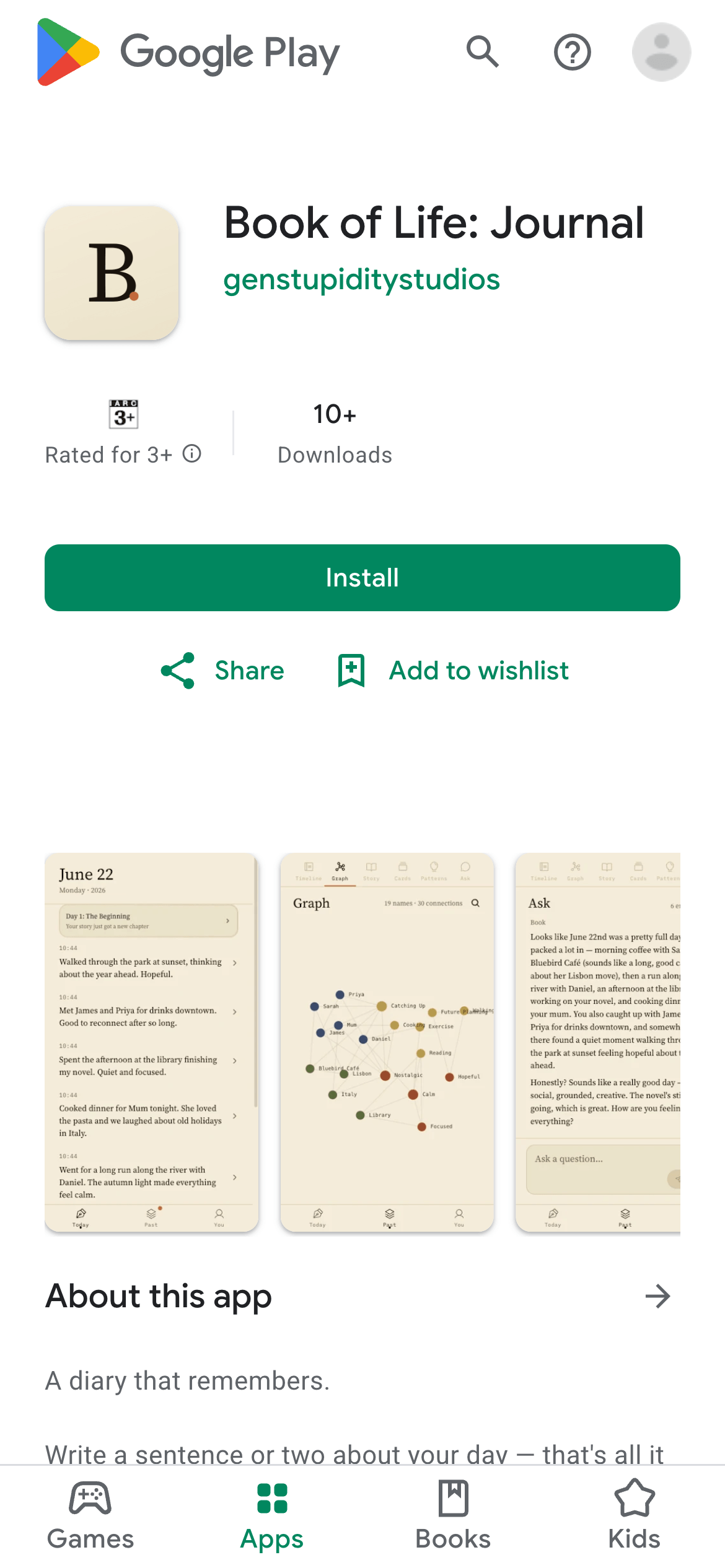
Yes, that says 10+ downloads. We all start somewhere.
Why bother with the store at all? The web app worked fine. But a journaling app lives or dies on habit, and habit needs reminders. Web push is a mess. It half works on Android, and on an iPhone Safari tab it doesn't work at all. A native app gets real push notifications, an icon on your home screen, and a store listing that people can actually find. So the store it is.
The trick: I didn't rewrite anything. The app is still the same Next.js PWA. I wrapped it with Capacitor, and the native app is basically a thin shell that loads the deployed site. The native layer only handles the native things: push notifications, the status bar. Everything else ships through the normal web deploy, which means I can fix a bug and every "app" user has it minutes later, no store review, no waiting for people to update.
The funny part is that the hardest bits weren't code. Store listings, screenshots in two languages, privacy declarations, an account deletion flow because the store requires one, figuring out why the deploy pipeline blocked my own commits. The app took months. The releasing took its own small eternity.
It also cleared Apple's review, so the iOS version is on the App Store too. And the app now speaks Thai: the whole UI and all the AI responses, not just labels.
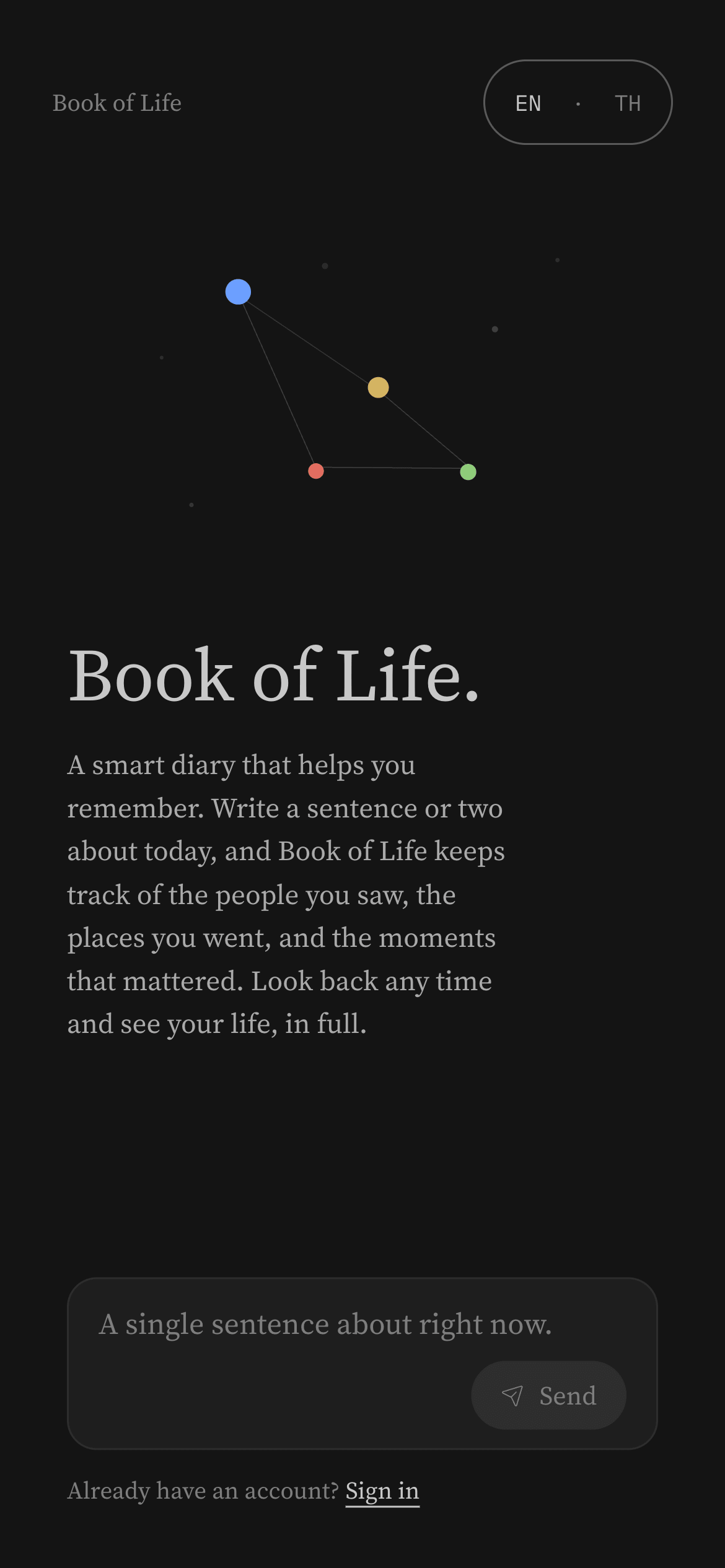
If you want to try it, bookoflifeapp.com/download sends you to the right store for your phone. Or write one entry in the browser first at bookoflifeapp.com/welcome, no account needed for the first one.